

Are Building Codes Law?
It's a question we get asked a lot by builders, subcontractors, developers, and homeowners across Townsville, Mt Isa, and North Queensland - and it's one that's genuinely more interesting than it first appears.
"Most building contracts require you to build in compliance with the building codes - but that's only part of the picture. Building codes carry legal force in their own right. Once the Building Act gives them that force, they operate almost like subordinate legislation. If you're in breach of the National Construction Code, the QBCC can act - they can even direct you to pull work down. That's a power that goes well beyond a simple contractual requirement."
- Sam Cohen, Principal Lawyer, Cohen Legal
That distinction matters.
Building codes sit in an unusual spot - not quite an Act of Parliament in their own right, but backed by legislation that gives them real teeth. And once you understand where that force actually comes from, a much bigger misconception starts to come into focus: the belief that the regulator can fix a contract dispute. It can't, and understanding why is often more useful than the "is it law" question itself.
 Building Codes Live in Two Places at Once
The first place is your contract. Most building and construction contracts - head contracts and subcontracts alike - require the work to be carried out in compliance with the relevant codes and standards. If it isn't, that's a breach of contract, full stop.
The second is legislation. In Queensland, the Building Act 1975 gives the National Construction Code legal force independently of what any particular contract says. That's why nonconformance can attract action from the regulator itself - the Queensland Building and Construction Commission (QBCC) - separate from and in addition to any dispute you might have with your builder.
Understanding that these are two separate systems, operating side by side, is the key to understanding everything that follows.
The Big Misconception: What the QBCC Actually Does
This is where things get interesting - and where Sam sees the same misunderstanding come up again and again.
"I always look at it this way: the QBCC is concerned about defective work. Yes, it's the regulator for builders, but in a building dispute, if you go to the QBCC because you have defective work, they assess that work against the construction codes or the Australian Standard - and then consider whether or not it's compliant with the guidelines." - Sam Cohen, Principal Lawyer, Cohen Legal
The catch is that "compliant with the guidelines" and "what you actually wanted" are not the same thing.
The Crack in the Concrete
Crack In A Concrete Veranda Slab Building Defect Tolerance Standards Queensland
"A crack in the concrete that might look unsightly isn't necessarily defective work, because the guidelines allow a gap up to a certain size. That's the problem. The guideline standards aren't always what a layperson would consider practical or acceptable." - Sam Cohen, Principal Lawyer, Cohen Legal
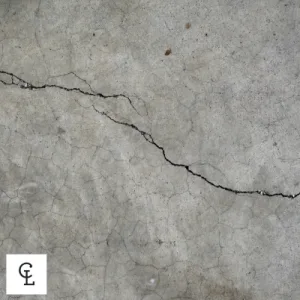
If the crack falls inside the tolerance set by the relevant standard, the QBCC has no power to order it fixed - even brand new, even on a home you paid full price for, even if you find it genuinely unsightly.
The Round Room, Square Room Problem
"It's similar if your contract says you want a round room and your builder builds you a square room. If the work is otherwise up to the construction code standard, the QBCC can't help you. They do not deal with contractual issues." - Sam Cohen, Principal Lawyer, Cohen Legal
That's the crux of it. The QBCC checks compliance with the code. It does not check compliance with your contract. If your builder delivered something different from what you agreed to, but the work itself meets the code, the regulator's hands are tied - and your only path forward is a contractual one, not a regulatory one.
"Reasonable," Not "Perfect" - The Standard That Actually Applies
"There are requirements in the standard building contracts - the work has to be done to a reasonable standard, to what I'd call a reasonable standard of a skilled tradesperson. Whether the work falls within that becomes subjective. You have to look at it and ask: is it, or isn't it, to a reasonable standard?" - Sam Cohen, Principal Lawyer, Cohen Legal
That's not just a turn of phrase.
Under Schedule 1B of the Queensland Building and Construction Commission Act 1991, every regulated domestic building contract carries an implied statutory warranty that work will be carried out in an appropriate and skilful way, with reasonable care and skill. It's a genuine legal standard - but "reasonable" is inherently a judgement call, which is exactly why these disputes so often end up needing expert evidence and, sometimes, a court to resolve them.
When Fixing It Costs More Than It's Worth
"Then the next question becomes: how much is the rectification going to cost? If it's so costly that it's impractical, the court won't order it - even if the builder is technically wrong. That principle actually comes from a specific case." - Sam Cohen, Principal Lawyer, Cohen Legal
The case is Bellgrove v Eldridge (1954) 90 CLR 613; [1954] HCA 36 - a High Court of Australia decision that remains the foundation of how Australian courts assess damages for defective building work. It set the rule that an owner is entitled to the cost of rectifying defective work, but only where doing so is necessary to bring the work into line with the contract, and is a reasonable course to take.
That second limb matters. Courts have applied it to mean that even where a breach is clearly proven, rectification can be refused if the cost is wildly disproportionate to the benefit gained - for example, demolishing and rebuilding a house over a defect that doesn't affect its safety or structural integrity. The High Court reaffirmed this in Tabcorp Holdings Ltd v Bowen Investments Pty Ltd (2009) 236 CLR 272, and Australian courts continue to apply it in building disputes today.
What This Means If You're the Builder
 Everything above cuts both ways.
The "reasonable, not perfect" standard isn't just a shield for homeowners — it protects builders too. You're not required to deliver flawless work, only work that meets the appropriate and skilful standard set out in your contract and the relevant code. Clients sometimes expect more than either the code or the contract actually requires, and understanding exactly where that line sits gives you a clear, defensible answer when a client pushes back on something that's genuinely within tolerance.
The same goes for Bellgrove v Eldridge. It's the same principle that stops a builder being forced into demolishing and rebuilding over a defect that doesn't affect safety or structural integrity, where the cost of full rectification would be wildly disproportionate to the actual problem. Courts look at proportionality on both sides of a dispute — not just at whether something is technically wrong.
In practice, the best protection is the same for builders as it is for anyone else in the contract: get the scope, the standard, and the tolerances agreed and documented before work starts. A clear contract that references the applicable Standard, sets out finishes and tolerances in writing, and records variations as they happen does more to prevent a dispute than anything that happens after the work is complete.
How to Protect Yourself Before You Build
"The only way to protect yourself is to do your research on your builder - talk to other people who've built with them, inspect previous work, look at what the finish is like. And the cheapest quote is not always the best quote. You get what you pay for." - Sam Cohen, Principal Lawyer, Cohen Legal
That advice holds because, as this whole picture shows, the regulator was never going to be your safety net for quality. The codes set a floor, not a ceiling. What sits above that floor - the finish you actually want, the standard you actually expect - is something you need to protect through the builder you choose and the contract you sign, not something you can fall back on the QBCC to fix after the fact.
Key Takeaways
- Building codes aren't legislation in their own right, but Queensland law - principally the Building Act 1975 - gives the National Construction Code legal force independently of any contract.
- The QBCC assesses defective work against the codes and Australian Standards. It does not enforce your contract.
- Work that technically complies with the code can still fall well short of what you contracted for - and the QBCC can't fix that gap.
- Every regulated domestic building contract carries an implied warranty that work will be done in an appropriate and skilful way, with reasonable care and skill - but "reasonable" is a judgement call, not a fixed line.
- Courts can decline to order rectification, even for a proven breach, where the cost is disproportionate to the benefit - a principle that traces back to Bellgrove v Eldridge (1954) HCA 36.
- The same legal protections that limit a homeowner's expectations also limit what a client can demand of a builder — proportionality cuts both ways.
- Choosing your builder carefully, and understanding your contract before you sign, does more to protect your build than any regulator can after the fact.

Cohen Legal Office, Townsville Legal Advice For Builders, Developers, And Homeowners Across North Queensland
For builders, subcontractors, homeowners, and developers across Townsville, Mt Isa, and North Queensland, understanding where the code ends and your contract begins is part of managing legal risk properly. Getting clear legal advice early can make all the difference. Talk to us today.
Disclaimer: This article provides general information only and does not constitute legal advice. You should obtain advice specific to your circumstances before making any decisions.