
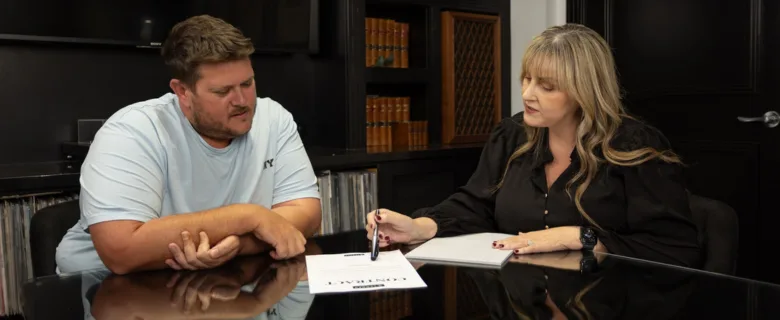
What Business Owners Often Misunderstand About Being a Company Director
The company protects your shareholders. It doesn't protect you.
It's one of the most persistent assumptions in small business: incorporate, and you're covered.
The company becomes the thing that owes money, signs contracts, and carries the risk - not you personally.
For the most part, that's true.
It's also where a lot of directors stop paying attention, and where the trouble tends to start.
"Because they're in a company, directors often believe they're protected by the corporate veil - the legal separation the company provides," says Sam Cohen, Principal Lawyer at Cohen Legal.
"But as a director, you carry legal responsibility for many of the company's actions, because you're the controlling mind behind it. You can be personally liable for tax debts and unpaid superannuation."
That gap, between what people assume a company structure does for them, and what it actually does, is where most of the misunderstandings about being a director come from.
Your duties are personal, not the company's

Company Director Reviewing Financial Statements At A Desk — Cohen Legal Townsville
A director's duties aren't just good practice. They're set out in law, in the Corporations Act, and they sit with the individual — not the company. Directors are required to act with care and diligence, in good faith, for a proper purpose, and to use their position and any information they hold properly.
None of that can be handed off.
Not to an accountant, not to a bookkeeper, not to a co-director who says they'll take care of it.
You can delegate the work, but you remain answerable for it.
Sam sees this misunderstanding constantly. "Many directors don't realise that they stand alone from the company," she says. It's a subtle but important distinction: the company is a separate legal person, and so, when it comes to your duties, are you.
Insolvent trading — where most of the exposure sits
The area where this catches people out most is insolvent trading.
In plain terms, a director has to stop the company taking on new debt once it can't pay its bills as they fall due, not once the balance sheet looks bad, but once the cash isn't there to meet what's owed. It's a cash-flow question, not an accounting one, and it's assessed at the time each new debt is incurred.
Sam Cohen, Principal Lawyer At Cohen Legal, Discussing Director Liability With A Client
Deposits get taken.
Orders get placed.
Wages get committed.
Every one of those is a new debt, and deliberating isn't a neutral act — it's when the liability accumulates.
Sam has acted for a director who found this out the hard way.
He'd taken on the role as a favour for a friend who wasn't eligible to be a director himself. He was never involved in running the company, never drew a wage from it, and went on with his own life. Then, out of nowhere, a lockdown director penalty notice (DPN) arrived because the company hadn't been lodging its returns.
By the time he sought legal advice, he'd already followed an accountant's suggestion to resign.
That meant he'd lost any ability to act as a director of the business meaning he couldn't negotiate with the tax office, couldn't access the company's accounts, couldn't do anything to improve his position.
The liability stayed with him regardless, because it had arisen while he was still the director.
"Worst advice ever," as Sam describes it.
Director penalty notices — tax and super don't disappear
There's an important distinction directors often don't know exists, and it has nothing to do with whether you can afford to pay. If a company doesn't pay its PAYG withholding, GST, or superannuation guarantee charge on time, each director becomes personally liable for a penalty matching the unpaid amount — automatically, by operation of the Taxation Administration Act. What happens next depends entirely on whether the company's reporting was up to date.
If the BAS, IAS, and super lodgements were made on time, that liability can still be wiped — by paying it, appointing a voluntary administrator or small business restructuring practitioner, or beginning to wind the company up, provided one of those steps happens before the notice is issued or within 21 days of it.
That's a genuine set of options, even for a company that's short on cash.
As Sam explains, if the lodgements weren't made, none of those options help. That's called a lockdown DPN (director penalty notice), and once it applies, paying the debt, or relying on one of two narrow defences, serious illness or having taken all reasonable steps, is essentially all that's left.
It's a distinction worth understanding well before it becomes relevant.
Liquidation doesn't wash your hands of it
One of the biggest misunderstandings Sam encounters is the idea that putting a company into liquidation ends a director's problems. It doesn't.
"Putting a company into liquidation doesn't absolve the director of anything," she says.
If money is owed to the company — through a director's loan, for example — the director is more likely to be called on for it, not less. And the liquidator isn't there to look after the director's interests.
"If you're in that position, you need to seek legal advice. The liquidator doesn't act for the director — the liquidator acts for the company, and the liquidator will recover against the director where they can."
Sam has seen how badly this can go when a director gets no legal advice along the way. In one matter, by the time she was engaged, the situation had escalated to the point where hundreds of thousands of dollars were on the table, and the family home was genuinely at risk.
"It's just horrific when no one gets advice," she says.
The one call that changes the outcome
If there's a single piece of advice to take from all of this, it's about timing — specifically, who you call first.
"The moment your accountant tells you the business is going to have trouble trading out of a situation, the next call should not be to a liquidator," Sam says. "The next call should be to a lawyer."
That's not a knock on accountants — good accounting advice matters, and Sam is clear that directors need it. But an accountant and a liquidator are answering different questions to the one a director actually needs answered: what happens to you, personally, from here.
Acting early also matters for another reason.
"One of the defences to insolvent trading is obtaining advice," Sam explains. "Start obtaining it, and document that you're obtaining it — that's what gives you access to the safe harbour provisions."
Safe harbour, and the small business restructuring options that sit alongside it, are worth their own conversation. For now, the point is simply this: the earlier you seek advice, the more options you actually have.
Don't take on a directorship you're not prepared for
Sam's closing point on this is one every business owner and every friend asked to help out should hear.
"Don't be a director for a friend," she says.
"Don't take on a directorship in any company unless you're prepared to do the job properly - the way the law requires. You need to know what's going on, because you're legally liable. If you're not prepared to do that, don't take the risk on.
And definitely don't do it for a company you're not actually going to be involved in."
Being a director isn't a formality, and it isn't a favour.
It's a legal position with personal consequences attached and understanding that early is usually what makes the difference between a manageable situation and a genuinely difficult one.
If any of this sounds close to where your business is right now — or you're simply not sure where you stand as a director — talk to our team. Make an appointment with Cohen Legal, and let's work out your position before it becomes urgent.
Learn more about our approach to business and commercial law: cohenlegal.com.au/areas-of-law
Disclaimer: This article provides general information only and does not constitute legal advice. You should obtain advice specific to your circumstances before making any decisions.
.