

Buying a Business: The Legal Checklist Most Buyers Skip
When most people start thinking about buying a business, they focus on the numbers.
What is it worth? What does it turn over? Is it profitable? How much will the bank lend?
Those questions matter. But they are only part of the transaction.
Before you agree on a price, there is another very basic question to answer:
What, exactly, are you buying?
It sounds obvious. You are buying the business.
But legally, there is more than one way to do that — and understanding the difference at the beginning can affect everything from the liabilities you inherit to the GST treatment of the sale.
As Victoria Tuttle, Associate at Cohen Legal, explains:
“It depends on the process, the scale of the business, and the client.”
No two purchases are exactly the same. But whether you are buying a workshop in Townsville, a professional services business in Mt Isa or another established operation in North Queensland, the starting point is the same:
Know what you are buying before you commit to buying it.
Are you buying the business or the company that owns it?

Victoria Tuttle, Associate At Cohen Legal, Discussing A Business Purchase Contract With A Client In Townsville
This sounds like a lawyer’s technicality.
It is not.
Imagine you want to buy a local mechanical workshop called Smith Mechanical.
When you say, “I’m buying Smith Mechanical”, you probably picture buying the things that make the business operate: its tools and equipment, stock, customers, business name, phone number, website, goodwill and perhaps the right to take over the premises.
You can structure the purchase so those agreed assets are transferred to you.
That is generally called an asset sale.
In simple terms, you are saying:
“I want to buy these parts of the existing business.”
But there is another way to do it.
Smith Mechanical might be operated by a company called Smith Mechanical Pty Ltd.
Instead of buying the assets out of that company, you could buy the shares in Smith Mechanical Pty Ltd itself.
You would then own the company.
The important distinction is that the company does not start again simply because its shareholder changes. It still owns its equipment. It still has its contracts. It still owes its debts. It still carries its existing legal and financial history.
What has changed is who owns the company.
A simple way to picture it is:
Buying the business assets is like choosing the contents of the box you want to buy.
Buying the company is buying the whole box, with everything already inside it.
And the box may contain things you were not expecting.
Business Queensland identifies asset sales and share sales as the two main methods of buying a business. In an asset sale, the buyer acquires agreed assets. In a share sale, ownership of the company changes while the company's existing rights and obligations continue.
Victoria says the distinction is regularly misunderstood.
“People say, ‘We’re buying the company,’ and I’ll ask, ‘Are you buying the company, or are you buying the business?’ They’re different.”
Neither option is automatically right or wrong.
But they can produce very different legal, accounting and tax consequences.
For a first-time buyer, you do not need to know the answer before speaking to your advisers.
You just need to know not to assume that “buying the business” can only mean one thing.
Does the way you buy it matter for GST?
Potentially, yes.
Once you understand whether you are buying business assets or shares in the company, tax becomes part of the structuring conversation.
Where business assets and operations are being sold, the transaction may be capable of being treated as a GST-free supply of a going concern if certain conditions are met.
In plain terms, those conditions are: you're registered for GST, both parties agree in writing that it's a going concern sale, the seller hands over everything needed to keep the business running, and the seller keeps running the business right up until settlement.
This is where practical issues such as premises, equipment and other essential parts of the operation can also become relevant to the tax treatment.
As Victoria explains:
“You need everything necessary to keep the business running in the same way it currently operates.”
A share purchase is a different transaction again, so different tax considerations can arise.
The important point is not to choose a structure based on a quick assumption about GST.

Business Owner Reviewing Due Diligence Documents Before A Queensland Business Purchase
Once you know what type of purchase is being proposed, your accountant and lawyer can help you understand the consequences before the contract is finalised.
Due diligence: look beyond the numbers
Your accountant has an important role in reviewing the financial position of a business.
But the financials do not tell you everything.
Due diligence is also about understanding how the business actually works and whether the things you are relying on will still be there after settlement.
A buyer may need to investigate:
- what assets and stock are included, their condition, and whether anyone else has a security interest in them
- the business's reputation and the goodwill being purchased
- licences, permits or qualifications required to operate
- the lease and whether the premises can continue to be used
- ownership and transferability of the business name, website, domain and other intellectual property
- key contracts and whether they can continue or be transferred
- employees who are critical to the operation.
Those answers can affect not only whether you proceed, but also what you are willing to pay and what needs to be dealt with in the contract.
Are the assets really worth what you think?
Plant and equipment can represent a significant part of a business purchase.
But appearing on an asset list does not necessarily make something valuable.
Victoria gives the practical example of an older forklift.
If it is ten years old and approaching the end of its useful life, you may decide it adds very little to the value of the deal. It may soon be a cost rather than an asset.
You also need to establish whether somebody else has a legal interest in valuable equipment.
The Personal Property Securities Register (PPSR) is a public register that shows whether someone else has a financial claim over an item. You would often see security on the PPSR against an item when funding has been obtained to purchase it. Government guidance recommends buyers search the register before purchasing equipment, because if the seller still owes money against it, it can sometimes be repossessed even after you've bought it.
The PPSR tells you who has a claim over an asset, but it doesn't tell you who owns it.
The lesson is simple: equipment sitting on the seller's premises is not necessarily equipment you can safely assume will become yours free of any other interest.
What reputation are you buying?
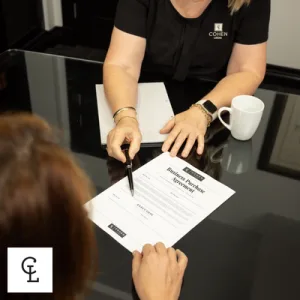
Commercial Lawyer Reviewing A Business Sale Contract In Townsville
An established business may have significant goodwill — value attached to its name, reputation, customer relationships and repeat business.
If you are paying for that goodwill, find out what it is actually worth.
Victoria puts it plainly:
“You wouldn’t want to go pay $500,000 for a business, of which the assets you purchased are goodwill (the standing in the community and it’s reputations) and the business name, only to find out the reputation isn’t what you were told”.” This can matter particularly in regional communities.
In Townsville, Mt Isa and across North Queensland, word of mouth travels. Customers know local operators. Online reviews remain visible long after ownership changes.
A poor reputation does not automatically make a business a bad purchase. A buyer may knowingly see an opportunity to turn it around.
Victoria's point is that it should be a conscious decision.
You do not want to pay for strong goodwill and discover after settlement that what you actually purchased was a reputation requiring substantial repair.
Can you legally operate the business?
This is one of Victoria's biggest messages for first-time buyers.
Before committing to the purchase, establish whether the business requires particular licences, permits, registrations or qualifications — and whether you can actually satisfy those requirements.
Different industries have different rules.
Sometimes a particular person needs to hold the relevant licence or qualification. In other situations, an appropriately qualified employee may allow the business to carry out particular work.
Either way, the question needs to be asked.
Victoria uses building and construction as a stricter example:
“Take a builder as an example. A QBCC licence belongs to the person, not the business. Buy a building company without your own licence, or a nominee who holds one, and it can’t legally take on work.”
You might be an excellent manager. You may understand the customers, finances and daily operation.
But that does not necessarily mean you are legally entitled to perform every activity the existing business performs.
And sometimes your ability to operate may depend on an employee who holds an important qualification or licence.
As Victoria says:
“It’s important to know what you’re going to need, and if you can get it.”
Imagine reaching agreement on price, spending money on advisers and negotiating the contract before discovering you cannot legally carry out a core part of the business.
Worse still, imagine discovering that after signing a contract that does not give you an appropriate right to walk away.
Before progressing too far, establish what licences, registrations, permits and qualifications the business relies on, who currently holds them and what needs to happen when ownership changes.
What does the lease really say?
Victoria Tuttle In Consultation With A Client At Cohen Legal — Commercial Law And Business Transactions
If a business operates from leased premises, the lease may be central to its value.
Consider a workshop that has occupied the same location for 20 years.
Customers know where it is. The signage is established. The address may effectively form part of the business's reputation.
Now imagine discovering that the lease has only a short period left, there is no further option, or a significant rent increase is approaching.
Victoria says these issues can become deal-breakers.
“How many years are left. How many options remain. What happens at the next rent review. And whether you can actually use the premises for what you're planning — the current use isn't always what the lease or the town planning scheme permits.” You may also need the landlord's consent to an assignment of the lease or another arrangement that allows you to occupy the premises after settlement.
If the business relies heavily on its location, a requirement to relocate soon after purchase could change the value of the deal considerably.
The lease should therefore be investigated as part of the purchase — not treated as an administrative issue to sort out later.
Does the business name actually belong to the seller?
A company name and a registered business name are not necessarily the same thing.
A company may have one legal name while trading publicly under a different registered business name.
Victoria's point is straightforward:
“If they don’t own the registered business name, they can’t sell it.”
ASIC has a formal process for transferring a registered business name. The existing holder starts the transfer and receives a transfer number, which the incoming owner then uses when registering the name.
If keeping the existing name matters to you, check how it is registered and who controls it.
Do not assume that because a seller has been trading under a particular name, the legal right to use it will automatically pass with the sale.
Who owns the website, domain and social media accounts?
Digital assets can now form a significant part of a business's value.
A website may generate enquiries. A domain may have years of search history behind it. Social media accounts may contain established audiences and valuable customer relationships.
But being listed in a contract does not necessarily mean an asset can easily be transferred.
A website may operate through an arrangement with an external provider. A domain might be registered in somebody else's name. An employee or contractor may hold the only administrative access to a social media account.
As Victoria explains:
“Having the website, domain and social media accounts listed in the contract means nothing if the seller isn’t actually able to transfer them to you.”
Before attaching value to a digital asset, establish who owns or controls it and what is required to transfer that control.

North Queensland Business Owners Discussing The Legal Steps Involved In Buying A Business
That includes websites, domains, email systems, social accounts, online booking systems, databases and other intellectual property used by the business.
Which employees does the business rely on?
For some businesses, employees are just as important as equipment or premises.
A key employee may hold years of technical knowledge, important customer relationships or a qualification the operation relies on.
Victoria encourages buyers to find out who intends to remain, what key employees do and whether the business can continue without them.
“You don’t want to buy a business and all of the staff leave at Settlement.”
There are also employment laws to consider.
Under the Fair Work Act, if an employee moves across to you when you buy the business, you generally have to count their time with the old employer as if it were time with you — for notice periods, for example. There are exceptions for annual leave, redundancy pay, long service leave and unfair dismissal rights, so it's worth checking how each entitlement is actually treated in your situation.
The REIQ Contract for Sale of Business also sets out a timetable for dealing with staff. As the buyer, you need to tell the seller which employees you plan to keep on five business days before settlement, then formally offer those employees a job at least two business days before settlement.
An offer does not guarantee that an employee will accept.
As Victoria explains:
“You can end up buying a shell of a business if the employees choose not to transfer — because they don’t have to.”
That becomes particularly important where an employee holds a licence, qualification or specialist knowledge essential to the operation.
If the business cannot function properly without a particular person, tell your lawyer before the deal becomes unconditional.
What happens if the seller starts competing with you?
Part of the price paid for an established business can be the goodwill attached to its customers, relationships and reputation.
So what happens if the seller completes the sale and immediately starts competing for those same customers?
Business sale agreements may contain restraint of trade provisions — a promise from the seller not to compete with you or approach your customers for a set time and area after the sale.
These clauses need to be worded carefully. A court will only enforce a restraint if it protects something genuine — like the goodwill you paid for — and it doesn't go further than it needs to.
For buyers, the practical question is straightforward:
If goodwill is an important part of what you are paying for, consider how that goodwill will be protected once the seller leaves.
When should you speak to a lawyer?
Victoria's answer depends partly on whether you have bought a business before.
An experienced business owner may already know the commercial questions to ask and may approach their lawyer once the broad terms are settled.
For a first-time buyer, Victoria recommends making contact earlier.
“If it’s your first time buying a business, call us first — we’ll guide you from there.”
That does not mean paying a lawyer to participate in every early discussion with a seller.
An initial conversation can instead help you understand what you need to investigate before you negotiate the final deal.
Victoria explains:
“It’s worth having a conversation with us first, so we can identify the kind of business you’re buying and what you need to look at. Once you’ve worked through that and reached a deal, we can put it on paper.”
That can prevent an expensive situation where a contract is already being prepared before somebody discovers an essential licence cannot be obtained, a key asset is excluded, an important employee is leaving or the premises cannot be secured.
You do not necessarily need your lawyer to ask every question for you.
But you need to know which questions matter before you commit.
Before you sign, know what you are buying
Buying an established business can give you an enormous head start.
You may be acquiring years of work — customers, systems, employees, equipment, premises and a recognised name.
But those things only have value if they actually come with the transaction and can continue working after the previous owner walks away.
Start by understanding whether you are buying selected business assets or the company that already owns them.
Then look beyond the purchase price.
Understand the GST implications. Check the assets and relevant security interests. Investigate the reputation. Identify the licences the business relies on. Read the lease. Confirm the business name and digital assets can be transferred. Understand the employee position and consider how the goodwill you are buying will be protected.
And bring your accountant and lawyer into the process early enough that their advice can influence the deal — rather than simply document decisions that have already been made.
For buyers in Townsville, Mt Isa and across North Queensland, Cohen Legal can help identify the issues that matter before you commit to a business purchase.
If you’re unsure where to start, our team is here to guide you. Book an appointment today
Disclaimer: This article provides general information only and does not constitute legal advice. You should obtain advice specific to your circumstances before making any decisions.